Adecco Talks: The upcoming skills cliff and turnover strategies
Learn more on the trends and research we're talking about this month.
5 minutes
May 21, 2025

The edge of a skills cliff
As technology and business needs evolve, the gap between what companies need and what workers can deliver is widening. While some organizations are bracing for impact, others are looking ahead and turning to reskilling programs to carry them safely – and competitively – into the future.
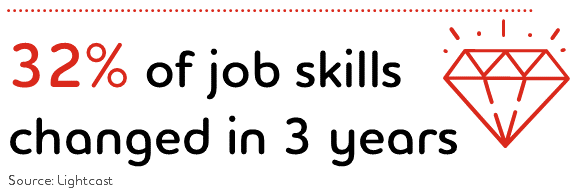
It's critical to align reskilling with your long-term business strategy. This requires keeping an eye on the current labor market while also taking into account the types of skillsets you will need for the next stage of your operations.
Benefits of having a strategic reskilling program:
- Close skills gaps faster
- Boost workforce agility
- Stay ahead of slower-moving competitors
- Engage and retain top talent
- Cut hiring and onboarding costs
- Strengthen your employer brand
- Enable smarter, future-focused planning
Predicting and prioritizing skills for the future can make it challenging to create an effective program that supports meaningful career transitions. Other obstacles for employers can include leadership buy-in, limited budgets and resources, employees resistant to change, and measuring the program’s impact and Return On Investment (ROI).
These kinds of challenges are why it’s a game-changer to partner with a staffing provider like Adecco, who offers free upskilling and reskilling courses and customized learning pathways for our associates. We can also help make sure these potential career opportunities are visible and feel obtainable to your temporary workers.

Navigating turnover in 2025
In 2021 and 2022, the US witnessed the “Great Resignation” as millions left their jobs for better prospects in a strong job market. By 2023, however, this trend slowed, returning closer to pre-pandemic levels thanks to fast-changing economic factors and a decrease in workers feeling confident about changing roles.
Including voluntary and involuntary exits, total separations in all industries have decreased 12.7% since January 2022.
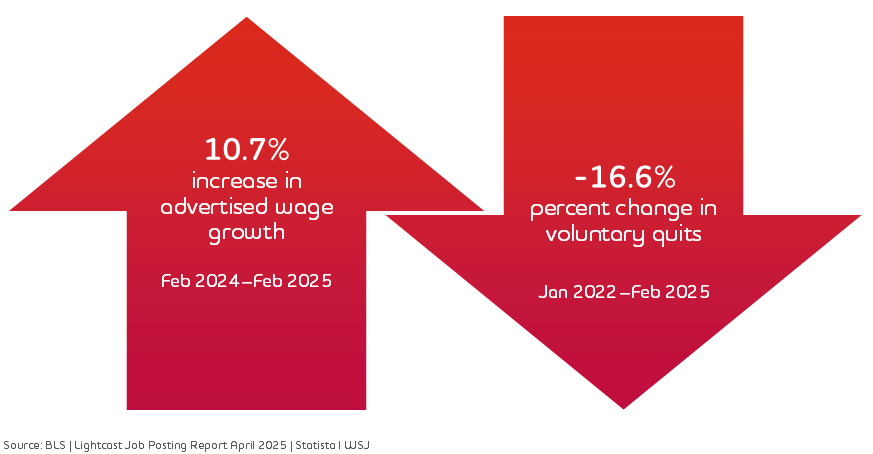
However, every industry and market faces unique challenges, and many of our clients still struggle with high turnover and attrition. Fortunately, Adecco has no shortage of strategies to address the root cause behind attrition, including instituting:
- A 32-hours-guaranteed program
- A 24/7 associate care team
- An onsite management program
- A Train-the-Trainer program
- A close client partnership
Understanding the reasons why workers leave is key, and if you’re not sure where to start, we do have some suggestions.
Additional trends we saw
- The unemployment rate is holding steady at 4.2%
- Employers added 177,000 jobs in April which surpassed expectations but reflects a slowdown from March’s revised gain
- Healthcare (51,000) still dominates job growth
- In March, unemployment rate for recent college graduates rose to 5.8%, the highest since July 2021
Let’s talk data
Whether it’s turnover, fill rates, or no-shows, we’re committed to creating staffing solutions driven by data that’s delivered in real time. Andrew Johns, Adecco’s Senior Director of Customer Analytics and VMS Technology, explained it further in a recent blog:
We’ve seen the benefits that can come from giving clients direct access to their own performance metrics – but what really sets us apart, I think, is how we approach data and our commitment to it. We’re comfortable with the fact that we are going to share the good, the bad, and the ugly with you.
Read more from Johns on how our approach to data translates to better staffing strategies – or contact us today to see how we can support you.