Adecco Talks: “The Great Detachment,” caregiver crisis, and manufacturing decline
Learn more on the trends and research we're talking about this month.
6 minutes
January 15, 2025

Introducing “The Great Detachment”
In 2021 and 2022, the US labor market witnessed “The Great Resignation” as millions quit their jobs.
More recently, as job openings steadily declined, voluntary quits have as well, implying that more workers are less confident about leaving their job and finding a new one.
This shift has contributed to what’s being called “The Great Detachment" by Gallup. More and more employees are feeling stuck, disengaged, and disheartened at work, often because they’re lacking opportunities for growth and autonomy.
While turnover has decreased, morale has still been impacted, so employers may now be facing diminished productivity, loss of future talent, and a resistance to change.
Although the underlying factors behind “The Great Detachment” are not entirely new, the unprecedented workplace transformations of recent years have introduced unique challenges and the need for strong employer leadership.
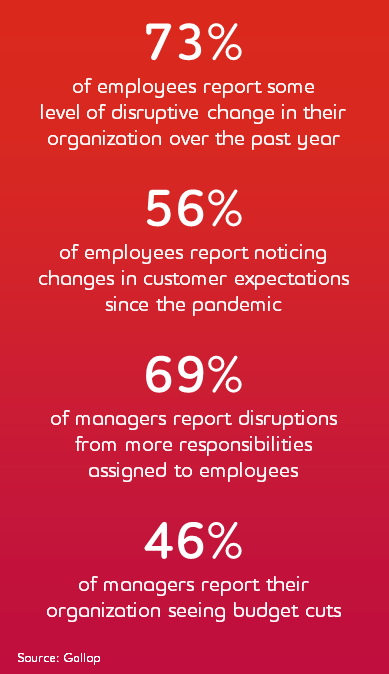
Gallup research identified five significant organizational shifts that have shaped this new era:
- Rapid organizational changes
- Hybrid and remote growing pains
- New client expectations
- New employee expectations
- Broken performance management practices
If you’re already struggling with your workforce, learn how Adecco leveraged our worker engagement strategies to achieve 99.9% on-time daily headcount fulfillment for one of our long-time clients.

Hidden cost of neglecting caregivers
Only 23% of employers say they prioritize hiring and supporting workers who are caregivers, but without a strategy to attract and retain them, those organizations could be losing out.
In 2023, childcare alone cost the economy a staggering $122 billion due to lower productivity and lost revenue. However, neglecting this critical talent pool has other hidden costs as well, including:
- Turnover: Filling vacancies, hiring and onboarding, and overtime costs
- Productivity: Rising presenteeism and absenteeism
- Workplace: Lower morale, strained client relationships, and weakened team cohesion
- Knowledge: Reduced institutional knowledge when employees leave
By contrast, organizations, who embrace caregivers’ needs as part of their talent strategy, could gain the competitive edge. Easy ones to adopt include:
- Extending flexible work options to all employees
- Prioritizing caregiving support as part of talent retention
- Conducting cost-benefit analyses to reveal ROI related to caregiving benefits
- Tailoring policies to meet the needs of diverse caregiving demographics
- Offering flexible reskilling and upskilling opportunities to enhance caregivers’ career prospects
Reach out today to learn more on how employers can support working parents and caregivers.

Understanding what’s ahead in manufacturing
The declining demand for manufactured goods in 2024, along with a more relaxed US labor market, momentarily stabilized the supply and demand for labor in the industry.
Lower interest rates, continued investment in US manufacturing, and other favorable economic conditions in 2025 may boost industry demand, potentially worsening labor shortages and pushing up wages. For the year ahead, manufacturers need to plan for demand volatility and strive to cut costs by lowering employee turnover.
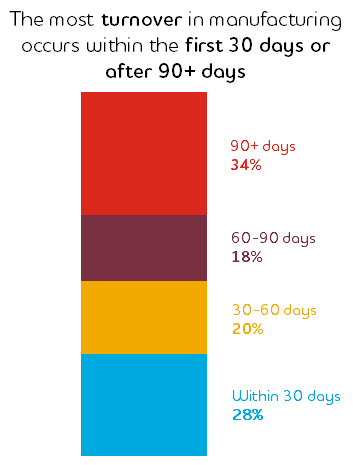
What strategies can manufacturers take to reduce turnover and increase their talent pool?
- Leverage skills-based hiring practices
- Enhance worker experience
- Adopt advanced workforce management tools
- Upskill and reskill workers
- Take an ecosystem approach to talent development
Learn how Adecco helped a new food manufacturing client tap into new talent pools in its region.
Additional trends we saw:
- The unemployment rate declined to 4.1%
- Labor force participation rate held at 62.5%
- 256,000 jobs added in December, far exceeding expectations
- For most of 2024, 75% of hiring took place in the healthcare, leisure and hospitality, and government industries
Reach out today!
Most experts aren’t quite sure what to make of 2025 yet, but preparing for the year ahead requires not only planning – but adaptability.
That approach applies to staffing too. Make sure you have a partner who can help you stay ahead of the latest trends and forecasts. Contact us today to find out how.