Adecco talks: Upcoming manufacturing crisis
Learn more on the trends and research we're talking about this month.
5 minutes
July 16, 2025
Addressing a demographic and skills crisis
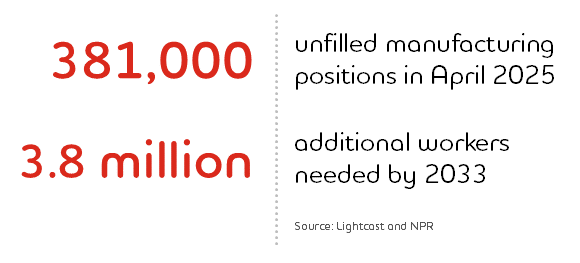
Grappling with an expanding talent gap, today’s US manufacturing sector faces a significant long-term risk to its stability.
Some estimates report that up to 1.9 million positions may remain vacant by 2033. But what factors are contributing to the growing workforce gap?
Retiring Baby Boomers: 3.7 million, or just over one-third of manufacturing workers, are approaching retirement.
Declining population: The US fertility rate is currently 1.62, below the replacement rate of 2.1.
Skills mismatch and educational gaps: Training programs fall short in teaching today’s needed skills, such as digital, logic controllers, robotics, and electrical systems.
Declining interest among younger workers: 77% of young adults say manufacturing careers are “not on their radar.”
Manufacturing’s next steps
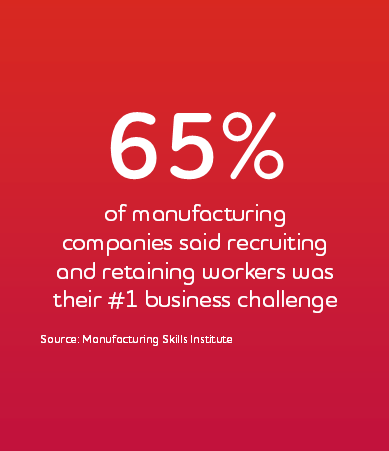
Securing operational continuity requires a focus on workforce planning: An organization needs to operate smoothly between internal departments as well as with other companies and vendors around the globe. Here are some key steps manufacturers can do now to prepare for workforce shortages:
1. Conduct workforce risk assessments
Identify frontline roles critical to operations and those at risk of going unfilled. Pinpoint causes, such as concentrated retirements, and act early to transfer knowledge or to upskill and replace talent. Where automation makes sense, ensure workers are equipped to adopt and maintain new technologies.
2. Focus on skills
Focus on skills over job titles. Identify needed capabilities and assess whether they can be trained locally, hired, or automated. When tasks are automated, consider how workers can add value elsewhere. Skills-based hiring builds a future-ready workforce, broadens talent pools, and increases flexibility in qualifications.
3. Build talent ecosystems, not just pipelines
Partner with community colleges, training providers, and local workforce groups. Engaging high schools is crucial, while most students hear about college, few are exposed to apprenticeships or non-degree careers. Reaching Gen Z and Gen Alpha early through schools helps promote alternative career paths.
4. Commit to workforce planning as a business strategy
Labor must be a C-suite priority, integrated into capital planning, site selection, and investment decisions. By factoring in labor supply, demand, cost, and skills – alongside market, tech, and geopolitical shifts – organizations can better shape operational strategy.
5. Support rebranding manufacturing careers
Share stories showing manufacturing as innovation hubs (autonomous vehicles, robotics, biotech) to attract STEM-focused youth.
6. Adopt innovative workforce strategies
Flexibility in work arrangements, competitive benefits, and robust training programs help meet workers’ changing expectations and lifestyles.

Additional trends we saw
- Job growth remains steady but is increasingly driven by government hiring (+73,000), while private-sector hiring is slowing
- Manufacturing employment (-7,000 jobs) is declining for a second straight month
- The unemployment rate fell to 4.1% partly because fewer people are looking for work, with labor force participation at its lowest since 2022 and immigrant participation dropping
- Revisions to previous months show job growth was stronger by a combined 16,000 jobs, adding to signs of resilience
Know your workforce is ready
Thanks to technology and population changes, every industry is facing significant transformation in the next decade, if not sooner.
Is your workforce ready to handle what’s ahead? If you’re not sure, Adecco can help. From upskilling and reskilling to skills-based hiring, we have the expertise and resources to keep your future ready. Contact us today to learn how.