Adecco Talks: Gamification strategies, call centers reimagined, and healthcare hiring
Learn more on the trends and research we're talking about this month.
5 minutes
February 19, 2025

Revolutionizing warehouse operations through gamification
The warehouse industry is the backbone of the supply chain field, but its success depends on engaged and satisfied employees.
Unfortunately, recent reports aren’t showing optimistic data:
- Warehouses face alarming employee turnover rates, with 1 in 3 companies losing over 50% of their staff annually
- Unengaged employees cost organizations $8.9 trillion globally in lost productivity
To combat these issues, forward-thinking leaders are leveraging gamification, an approach inspired by game design. The basic principles strive to motivate workers, improve productivity, and foster a sense of purpose in the workplace.
One report finds that gamification can increase productivity by 50% and employee engagement by 60%.

Use gamification as your winning strategy
Integrating game-like elements into daily operations can be accomplished by using technology or simple tracking systems to create engaging, measurable, and interactive experiences that align with employee tasks and goals.
How employers end up winning too:
- Reduced absenteeism and errors: Lower absenteeism by 81% and improve quality through reducing defects by 41%
- Improved productivity: Achieve 18% productivity gains to drive motivation
- Increased retention: Help warehouse teams reduce turnover rates by 18%-43%
- Enhanced safety outcomes: Reduce safety incidents by 64%
- Higher profitability: Achieve higher profitability and customer satisfaction, contributing to long-term growth

Perception of call center work has changed
Driven by changing technology, client expectations, and market demands, call center work has evolved significantly over the years. Today, organizations are making a deliberate effort to elevate the perception and role of call center agents from merely operational to strategically integral.
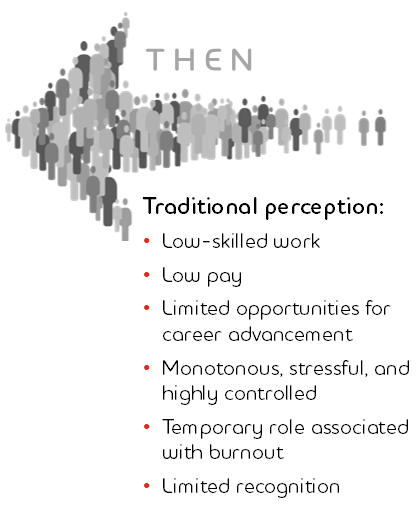
47% of agents see themselves building a long-term career in the call center industry, so this presents an excellent opportunity for employers to provide well-defined career paths that encourage development and showcase available growth opportunities.
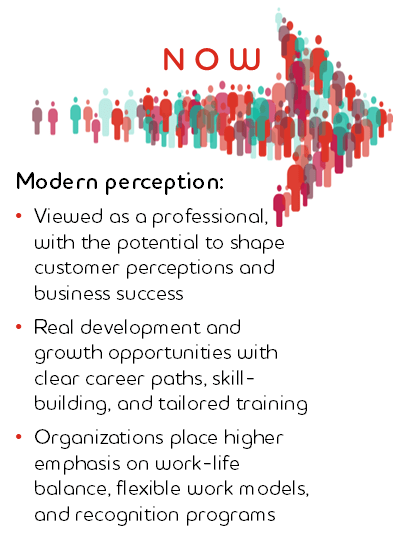
By valuing agents’ contributions and creating environments where they can truly thrive, organizations can reduce costs and gain a competitive advantage. To accomplish this, employers can focus on:
- Enhancing morale and job satisfaction
- Fostering motivation, loyalty, and engagement
- Reducing burnout, stress, and turnover
- Promoting teamwork and work-life balance
- Increasing productivity and service quality
Employers can also improve agent engagement by providing flexible and remote work opportunities, recognizing high performers, and offering onboarding and competitive wages.

Outlook for the 2025 healthcare workforce
Despite improvements in engagement, the healthcare industry faces ongoing workforce challenges in 2025 – including labor shortages, burnout, and mentorship gaps.
In addition, rising care demands, pandemic aftereffects, systemic inefficiencies, and other industry challenges still strain the workforce, so many of today’s healthcare leaders are embracing new staffing strategies and technology. This includes using AI to ease administrative tasks, create flexible work options, and prioritize well-being to build a patient-focused workforce.
A recent Deloitte report identified four key areas for employers to focus on:
- Rebuild workforce trust through efforts to reduce burnout, invest in mentorship programs, and fostering transparent communication
- Redesign teams for modern care by creating agile workforce structures that adapt to home-based and outpatient care models
- Invest in cost-saving technology to address financial strain, improve workforce efficiency, and mitigate burnout while ensuring proper training and ethical implementation
- Support workforce wellness and integrate wellness programs into core workforce strategies
Learn how the right staffing solution can improve your healthcare hiring and onboarding process – and read more about the work of our Healthcare & Life Sciences team.
Additional trends we saw
- The US economy added 143,000 jobs in January
- The unemployment rate declined to 4.0%, showing cooling but still solid gains
- Wage gains rose more than expected to 4.1% from a year ago
- Job openings slid in December – while hiring, voluntary quits and layoffs held steady
Let’s talk!
Navigating a changing labor force is never easy.
That’s why you need a partner who can help you stay on top of the latest workforce and industry trends. Contact Adecco today to see how our experts can help you better understand staffing within your field, for your region, and for what’s ahead.