AI and the C-Suite: Rethinking Talent Strategy to Future Proof the Workforce in 2025
Discover how C-suite leaders are rethinking talent strategy to align with AI advancements, drive retention, close skill gaps, and future-proof workforce success.
8 minutes
28th of May, 2025 Adecco
HR leaders must unite AI, data, and talent. Discover bold strategies to upskill, retain top talent, and future-proof your organization in 2025.
Why Business Leaders Need to Act Now
Artificial intelligence (AI) is reshaping the global business landscape, and with this shift comes the undeniable need to rethink how organizations approach talent strategy. For businesses to stay competitive, the C-Suite must align on priorities that unite technology and talent. According to insights from The Adecco Group’s (TAG) 2025 Business Leaders research, identifying strategies that match workforce needs with rapidly advancing AI capabilities is pivotal for success.
This blog will explore four core areas of disruption and opportunity within talent management, highlighting actionable steps for forward-thinking leaders to ensure long-term resilience.
Leadership Priorities Are Evolving
A Seismic Shift in Business Objectives
Technology alone cannot secure business success; talent strategies need to align seamlessly with organizational goals. Alarmingly, 53% of CEOs report that their leadership teams struggle to unite on strategies and timelines needed to operationalize AI initiatives. Workforce strategies failing to keep up with disruption are seen as the top threat to future business growth.
It’s up to Chief Human Resources Officers (CHROs) and HR leaders to bridge the gap between ambitions and capabilities. Natalia Wallenberg, CHRO of the Adecco Group, emphasizes that “HR leaders must act as translators between business ambition and talent capability. We can’t afford to wait.”
Key Considerations for Leaders
-
Leadership Training: Invest in leadership development programs that equip executives to make collaborative, future-oriented decisions.
-
Workforce Alignment: Ensure tech solutions are implemented with a people-first approach, preventing disconnects between strategy and execution.
The Reality of AI in the Workforce
Are Expectations Outpacing Reality?
The promise of AI often generates excitement, but businesses frequently place unrealistic pressure on employees to adapt quickly without adequate support. While 60% of companies expect workers to upskill to utilize AI, only 25% of employees have received formal training. This mismatch exacerbates skill gaps and negatively impacts retention and employee experience.
Daniela Seabrook, CHRO at Nestlé, points out that “You can’t expect people to embrace change if you don’t show them the path. Training and communication must go hand-in-hand.” Companies that incorporate responsible AI frameworks are notably more likely to include upskilling programs and comprehensive onboarding processes, benefiting internal mobility and retention.
Recommended Actions
-
Upskilling and Reskilling: Prioritize structured training initiatives to support employees as they adapt to AI.
-
Mentoring Programs: Initiate mentoring systems to provide hands-on guidance in AI application.
-
Clear Communication: Define expectations for who is responsible for adopting and implementing AI. Transparency builds trust and confidence within teams.
Characteristics of Future-Ready Leaders
Redefining Workforce Success
Only 10% of global organizations in the TAG study qualify as “future-ready.” What sets these organizations apart? They’ve adopted proactive talent strategies that integrate adaptability, data-driven insights, and skills-based hiring.
-
65% use skills-based hiring to enhance team agility.
-
Future-ready companies invest in leadership development and foster a culture of continuous learning.
-
They’ve embraced hybrid work models and agile approaches that align closely with evolving market demands.
Natalia Wallenberg believes that “Adaptability must be embedded in your company culture. That’s how you build a future-proof workforce.”
Tips for Building a Future-Ready Organization
-
Focus on Adaptability: Create workforce plans that value flexibility over rigid, job-based roles.
-
Leverage Continuous Learning: Expand opportunities for employees to develop their careers alongside AI evolution.
-
Remote Work Optimization: Invest in technologies and policies enabling effective hybrid and remote work environments.
Breaking the Skills Gridlock with Data
The Power of Workforce Insights
Talent shortages overtook technology selection as the top barrier to digital transformation in 2025. However, 33% of companies are leveraging data analytics to close skill gaps and anticipate market demands. This data-driven approach ensures that workforce planning aligns with both present and future needs.
Daniela Seabrook states, “Skills are the new currency, and data is how we’ll spend it wisely.” By investing in AI-powered tools to predict labour trends, future-ready companies are building stronger, more resilient talent pipelines.
How to Incorporate Data-Driven Talent Strategies
-
Implement analytics tools for workforce forecasting and recruitment.
-
Develop a skills taxonomy to map current employee capabilities against organizational goals.
-
Focus on internal mobility programs that address critical skills shortages within existing teams.
A Human-Centric Approach to AI
Driving Long-Term Success
The key to future-proofing the workforce doesn’t lie in replacing people with machines – instead, the C-Suite must align AI initiatives with inclusive, human-focused strategies. Building partnerships between CHROs, CTOs, and CFOs is essential to achieving this balance. AI adoption should empower leaders and employees to unlock new growth opportunities and retain top talent.
What Leaders Need to Do
-
Refine employer branding and highlight value propositions that appeal to AI-savvy candidates.
-
Balance automation with a focus on employee engagement and wellbeing.
-
Collaborate across departments to shape AI strategies that support both agility and innovation.
Strategic workforce planning powered by AI has the potential to transform recruitment, reskilling, and overall employee satisfaction. However, it requires a collective effort by leaders to provide the vision that inspires organizational change.
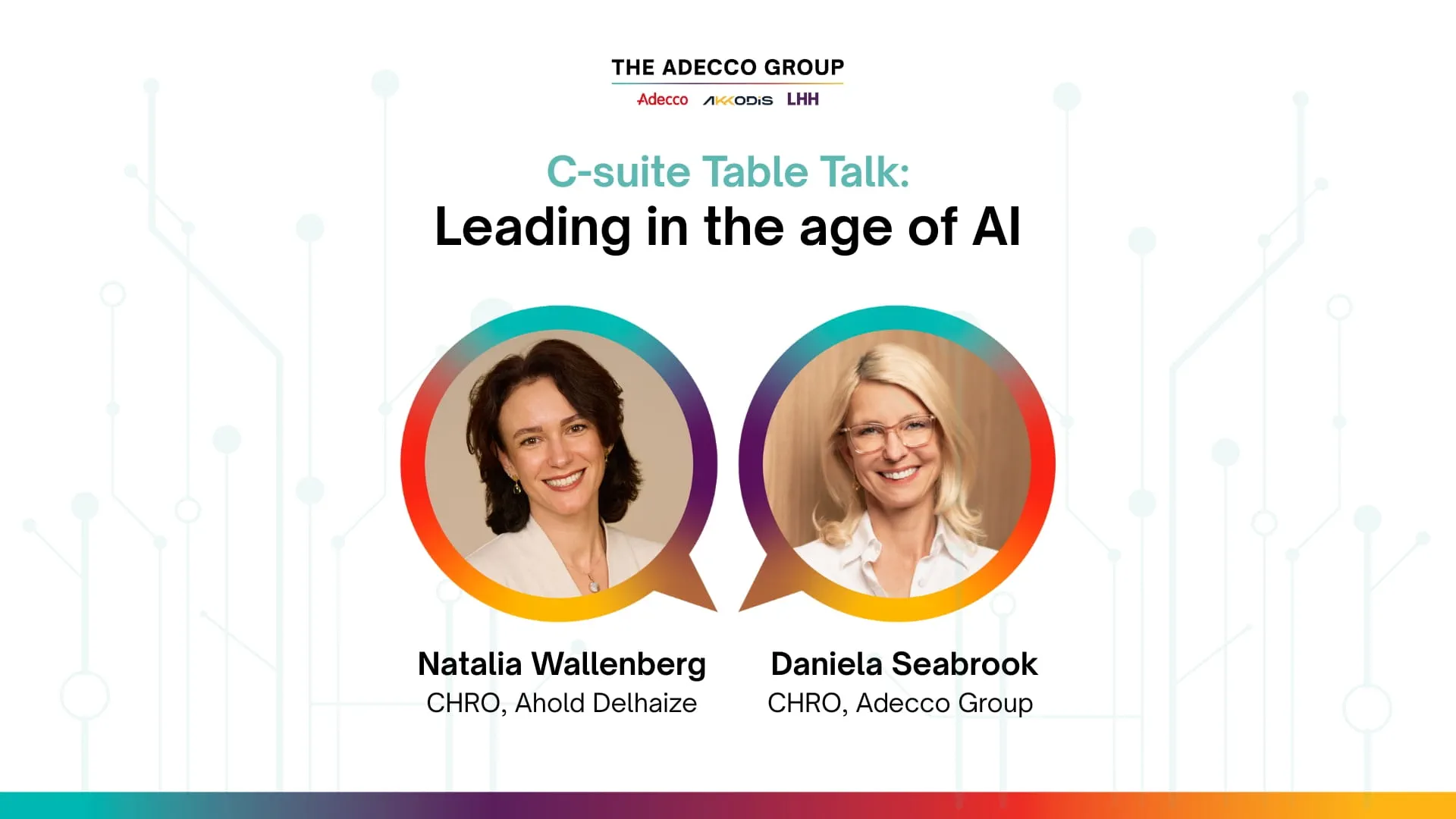
Stay ahead of disruption. Watch the full C-Suite Table Talk to hear industry leaders share insights on reshaping talent strategies with AI. Click here to access the discussion now.
Have questions about how to move forward with your AI talent strategy? Our experts are here to help. Contact us today to start building a future-ready workforce.